
How to Decide Whether an AI Workflow Ships, Changes, or Stops
A decision framework for AI teams that need evidence before shipping, revising, or stopping an agent, RAG, or model workflow.
- Author
- EAVAE Labs
- Reviewed by
- EAVAE Labs
- Published
- Jul 12, 2026
- Updated
- Jul 12, 2026
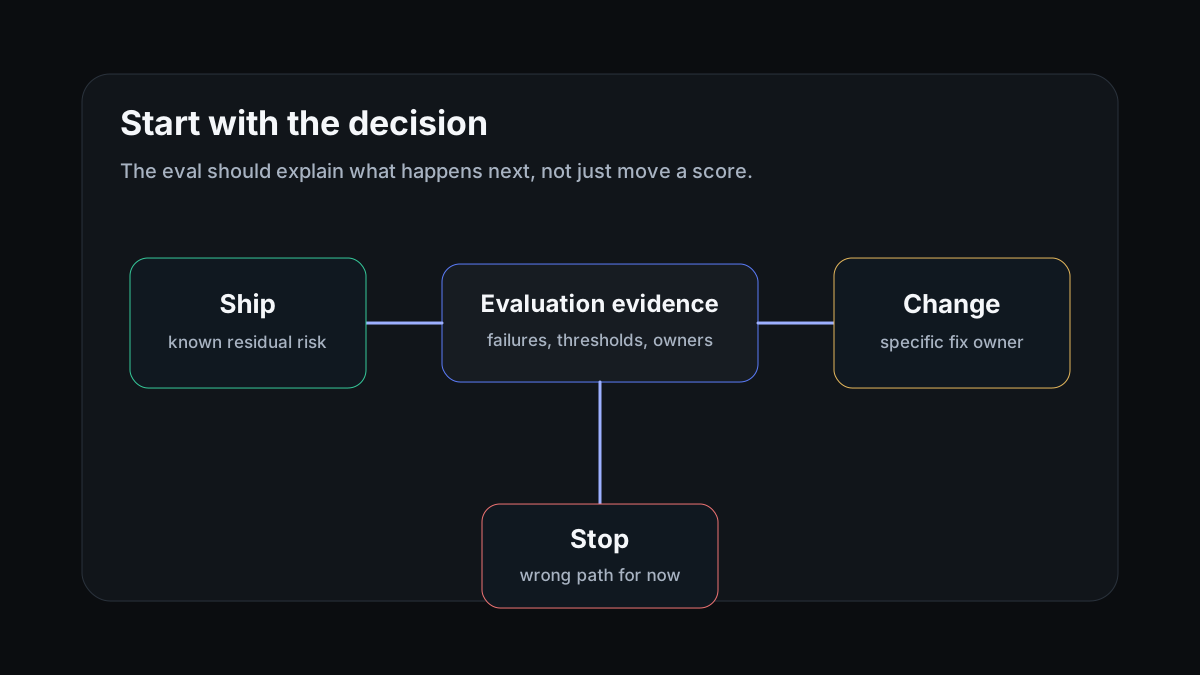
Start with the decision, not the metric
A useful eval begins with the decision the team has to defend. Ship, revise, and stop are different decisions, so they need different evidence thresholds.
A shipping decision needs blockers, warnings, and acceptable residual risk. A revision decision needs a narrow failure explanation and a likely owner. A stop decision needs enough evidence to show that more prompt work is not the next responsible step.
Separate blockers from weak signals
Unsafe actions, missing escalation paths, unreproducible critical failures, and regressions in high-value tasks should become blockers.
A weak score movement without a reproducible failure should not dominate the decision. Treat it as a prompt for investigation, not as the conclusion.
Make the output reusable
The decision should leave behind an evaluation plan, replay rows, failure taxonomy, release-gate checklist, and a memo that explains the evidence.
That artifact set matters because the next candidate workflow will otherwise restart the same argument with different anecdotes.