
RAG Regression Testing: What to Track Before Retrieval Changes
A concise checklist for tracking RAG regressions across retrieval, context assembly, answer quality, and release gates.
- Author
- EAVAE Labs
- Reviewed by
- EAVAE Labs
- Published
- Jul 12, 2026
- Updated
- Jul 12, 2026
Track the retrieval boundary
Before a retrieval change, define which tasks depend on freshness, exact citation, domain-specific phrasing, or long-tail coverage.
Keep representative queries and expected source behavior stable enough that a new retriever can be compared against the previous path.
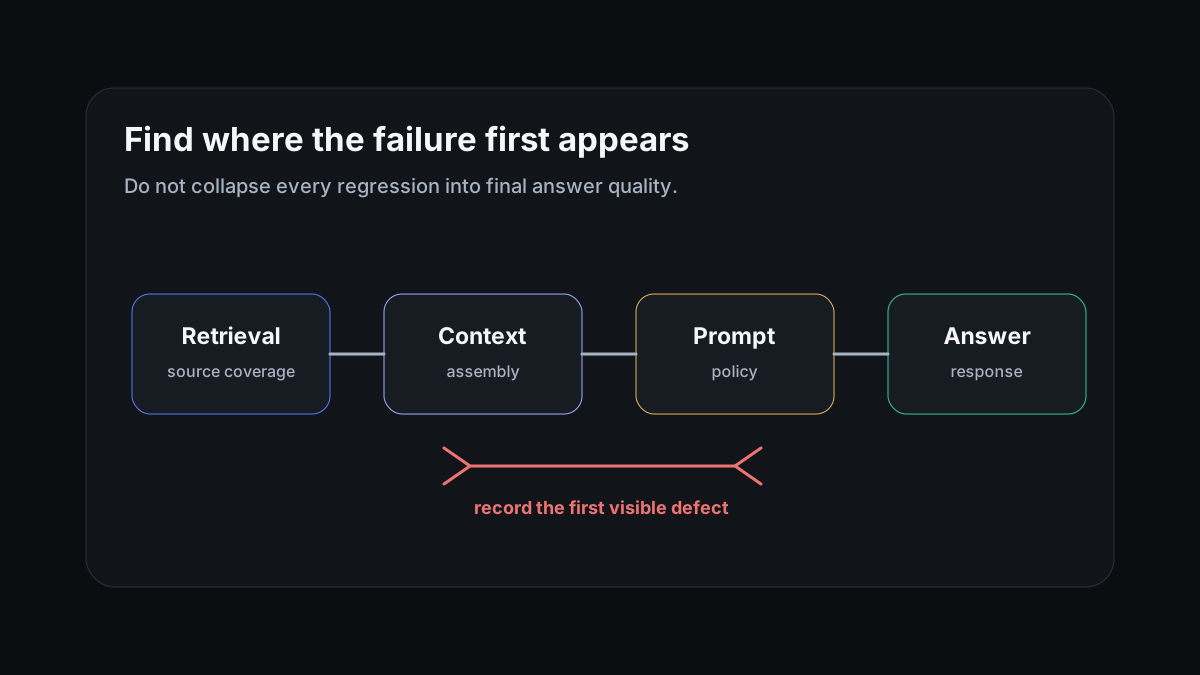
Do not collapse every failure into answer quality
A bad answer may come from missing documents, stale context, irrelevant chunks, broken ranking, context assembly, prompt policy, or the model's final response.
The eval should record where the failure first appears. Otherwise the team fixes the visible answer while the retrieval defect remains.
Gate risky changes
Release gates should name blockers such as stale retrieval on regulated content, missing source coverage for high-value tasks, or unsafe synthesis when context is incomplete.
Warnings can cover lower-risk drift that needs monitoring but should not block every release.